
One of the stunning developments in 2025 was the capitulation of major law firms to the unlawful threats made by Donald Trump. On March 14, 2025, Trump issued Executive order 14237, “Addressing Risks from Paul Weiss,” suspending the firm’s lawyers’ security clearances, restricting their access to federal buildings, and directing agencies to review and potentially terminate contracts with the firm and its clients. The order served as a warning to current and prospective clients that hiring Paul, Weiss could cost them federal contracts or access, and it publicly framed the firm as a “risk” to U.S. interests because of past work and personnel Trump disliked.
But lawyers and their clients –– just like all of us –– have constitutional rights under the First Amendment to freely associate with whomever they like. You can join with the Proud Boys, the KKK, the ACLU or go to Harvard or Columbia (those poisonous liberal bastions!) and if you don’t break the law, you’re good!
Trump’s threats aim to use the power of the federal government to impair that fundamental right.
Still, after the Executive order, Paul, Weiss agreed to a deal under which Trump withdrew the order in exchange for the firm abandoning DEI‑type policies, submitting to an audit of its employment practices, and providing roughly $40 million in pro bono legal services to projects aligned with his administration.
Paul, Weiss was not the only law firm attacked by Trump. Similar orders against Perkins Coie, Covington & Burling, and other firms have revoked security clearances, barred access to federal facilities, and canceled or chilled government contracts in clear retaliation for their clients or prior advocacy against Trump. Jenner and Block and Susman Godfrey were also targeted.
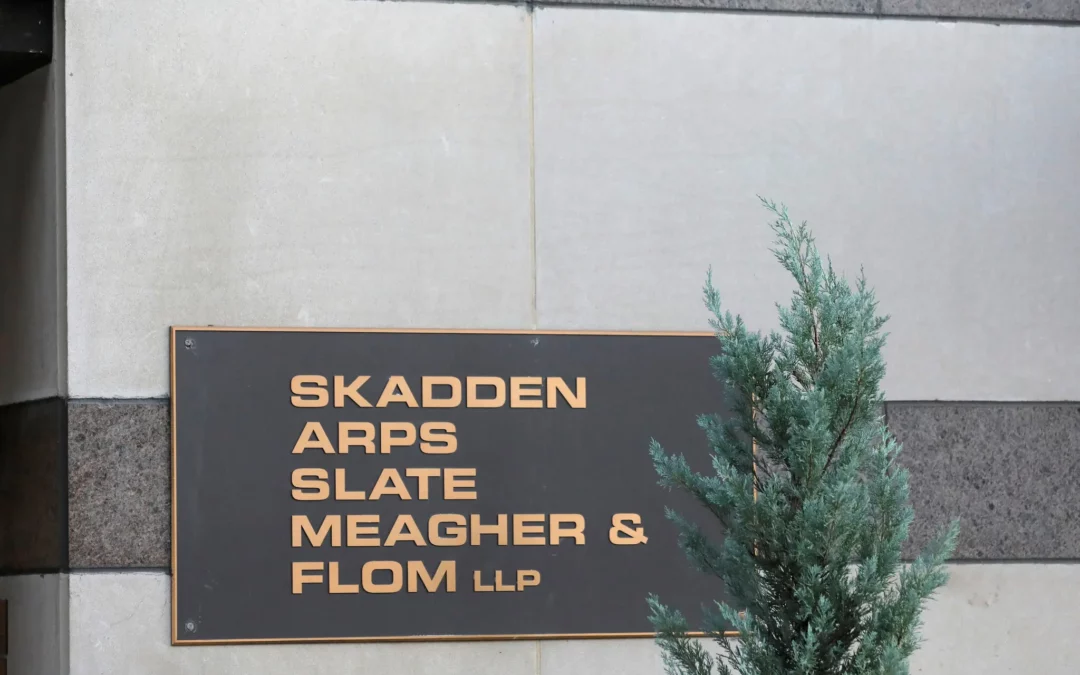
Skadden Arps was never formally hit with an Executive order, but Trump had just used such orders on several large firms and made clear that more firms could be targeted, creating a credible threat that Skadden could be next. So, Skadden struck a preemptive agreement: it committed to at least $100 million in pro bono legal services for causes favored by Trump (with an emphasis on veterans and public servants) and to renounce DEI‑type practices in favor of “merit‑based” hiring and scholarships tied to administration‑aligned initiatives (e.g. hiring conservative-minded white men).
In a well-crafted interview with Michael Barbaro, a former young attorney at Skadden Arps, Thomas Sipp, explains why caving in to Trump’s threats was yielding to an unconstitutional act, reflecting poorly on the firm’s commitment to the rule of law. Skadden Arps, Paul Weiss, and other firms had every means, motive, and opportunity to fight back.
Some law firms did in fact fight back. Federal judges across multiple cases have struck down these orders or issued injunctions, deeming them retaliatory and abusive.
- U.S. District Judge Beryl Howell permanently blocked the Perkins Coie order, calling it an “unprecedented attack” on the legal system that “violates the Constitution and is thus null and void,” chilling representation of Trump’s opponents.
- Judge John D. Bates ruled the Jenner & Block order unconstitutional, stating it “seeks to chill legal representation the administration doesn’t like” in violation of the First, Fifth, and Sixth Amendments.
- Judge Loren AliKhan described the Susman Godfrey order as a “shocking abuse of power” based on a “personal vendetta,” targeting firms for their clients and granting a permanent injunction
So, it was not entirely “legal” for Trump to threaten and to use his powers as President, but caving into his demands was certainly legal, even if wrong. Kudos to the law firms that fought against a blatantly unconstitutional threat from Mr. Trump, and shame on the “big law” firms that complied. The Daily’s interview with Thomas Sipp is worth a listen; he’s a young man that believes in the American dream and the rule of law. By bending to the will of a bully, a distinguished and successful law firm lost an honorable attorney.